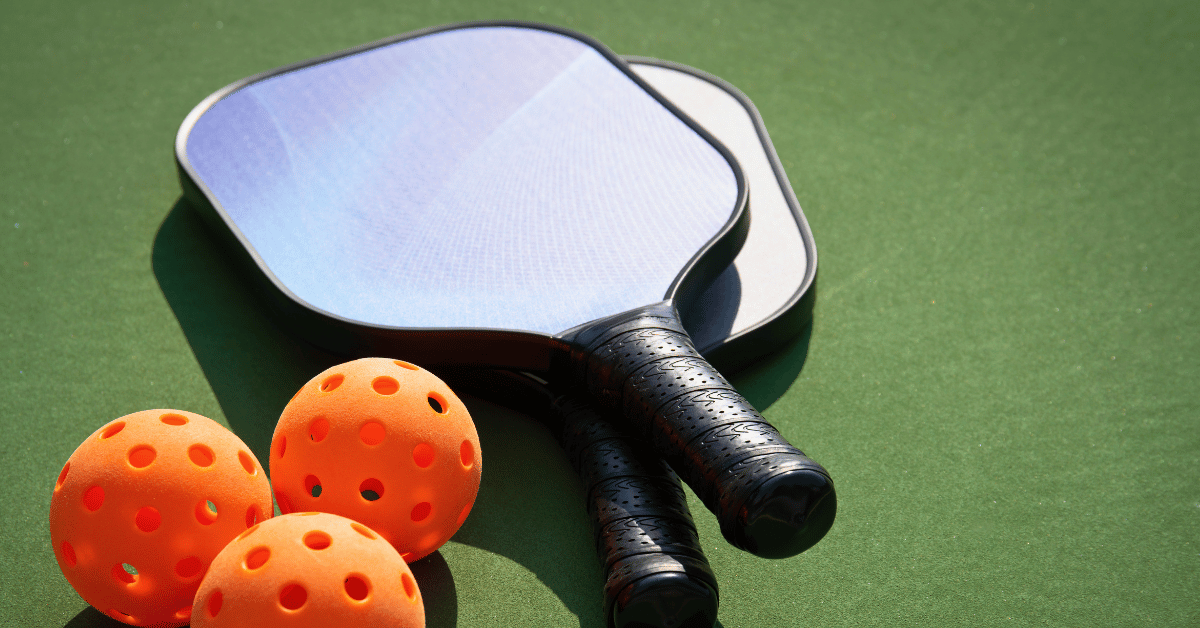
Buying your first pickleball paddle should be simple. Then you open a shopping page and suddenly face terms like T700 carbon fiber, 16mm polymer core, elongated shape, and spin technology.
You wanted to play pickleball. Apparently, you have accidentally enrolled in an engineering course.
The good news is that beginners do not need the most expensive or powerful paddle. The best pickleball paddles for beginners are comfortable, forgiving, and easy to control while you learn serves, dinks, volleys, and basic shot placement.
This guide focuses on a simple idea: choose a paddle that helps with your biggest beginner problem.
What Makes a Pickleball Paddle Good for Beginners?
An advanced player may search for maximum spin or explosive power. New players usually have a different challenge: getting the ball where they actually intended.
Selkirk’s beginner guidance recommends wider paddle faces, large sweet spots, and thicker cores as useful control-focused features for new players. Read Selkirk’s beginner paddle guide.
A Large Sweet Spot Reduces Frustrating Mishits
The sweet spot is the area of the paddle face that produces a cleaner, more consistent hit.
Beginners do not always contact the ball perfectly in the center. Shocking, considering most people do not become professional athletes during their first Saturday morning game.
A forgiving paddle with a generous hitting area can help make off-center contact feel more manageable.
Control Matters More Than Extreme Power
Power sounds exciting, but too much pop can make it harder for a beginner to keep shots in the court.
Control helps you learn:
- Dinks
- Third-shot drops
- Serve placement
- Resets
- Controlled volleys
Pickleball Central also notes that beginners who do not yet use spin deliberately may get more consistency from less spin-focused equipment, since technique is a major contributor to producing spin.
Comfortable Weight Makes Learning Easier
Many popular beginner-friendly paddles sit around the upper-7-ounce to low-8-ounce range. For example, the SLK Latitude is listed at 7.6 to 8.0 oz, while the Franklin Pilot is 7.7 to 8.2 oz.
The right feel still depends on the player. When possible, try different paddle weights before buying.
Best Pickleball Paddles for Beginners at a Glance
Paddle | Best For | Core | Listed Weight |
Vatic Pro PRISM | Learning control | 14mm or 16mm options | Varies by configuration |
SLK EVO Control | Overall beginner control | 16mm polymer honeycomb | 7.6–8.1 oz |
JOOLA Essentials | Casual beginners | 12mm polymer | 8.2 oz average |
SLK Latitude | First paddle | 13mm polymer honeycomb | 7.6–8.0 oz |
Franklin Pilot | Lightweight feel and spin | 10mm polypropylene | 7.7–8.2 oz |
SLK Geo | Beginner wanting room to improve | 14mm polypropylene | 7.8–8.1 oz average |
Manufacturer specifications can change by model or configuration, so check the current product page before purchasing.
6 Best Pickleball Paddles for Beginners
1. Vatic Pro PRISM: Best for Learning Control
Best for: Beginners who want a paddle they can keep using as their skills improve.
The Vatic Pro PRISM is an interesting beginner option because the PRISM line is positioned around a control-oriented, plush feel. Vatic currently offers PRISM configurations in 14mm and 16mm thicknesses and several shapes. See the Vatic Pro PRISM.
Pickleheads’ July 2026 paddle guide also identifies Vatic Pro as an excellent budget direction for beginners.
Why beginners may like it:
- Control-focused feel
- Multiple shapes and thicknesses
- Suitable for players planning to improve
- Less need to replace a basic starter paddle immediately
Possible downside: The number of configurations may confuse a completely new player.
2. SLK EVO Control: Best Overall for Beginner Control
Best for: Players struggling to keep powerful shots inside the court.
The SLK EVO Control Max has a 16mm Rev-Control polymer honeycomb core, T700 CarbonFusion carbon fiber face, and a listed weight range of 7.6 to 8.1 oz. Selkirk classifies it for beginner-to-intermediate players. View the SLK EVO Control.
A 16mm control-oriented design makes sense for beginners working on softer shots and placement.
Why beginners may like it:
- Designed for beginner-to-intermediate players
- Control-focused construction
- Wide Max shape
- Comfortable listed weight range
Possible downside: A player obsessed with maximum power may want a more aggressive paddle later.
3. JOOLA Essentials: Best for Casual Beginners
Best for: Family games, recreational players, and first-time buyers.
Some beginners do not need a premium carbon fiber paddle. They need something they can take to the court and start using without holding a board meeting about paddle technology.
The JOOLA Essentials set includes two paddles, two balls, and a sling bag. JOOLA lists the paddles with a 12mm response honeycomb polymer core, fiberglass surface, and 8.2 oz average weight. Explore the JOOLA Essentials set.
Why beginners may like it:
- Complete recreational set
- Two paddles included
- Polymer core
- Easy starting option for couples or families
Possible downside: Serious players may eventually want a more advanced control paddle.
4. SLK Latitude: Best First Pickleball Paddle
Best for: New players who want a simple, beginner-focused paddle.
The SLK Latitude is officially described by Selkirk for beginner-to-intermediate players. Its specifications include a 13mm polymer honeycomb core, graphite face, 4.25-inch grip circumference, and 7.6 to 8.0 oz weight range. Check the SLK Latitude.
Nothing about the paddle requires you to understand your “advanced all-court offensive identity” before your first game.
Why beginners may like it:
- Beginner-to-intermediate positioning
- Manageable weight
- Graphite face
- Straightforward design
Possible downside: Players who rapidly develop a control-heavy game may prefer a thicker 16mm paddle.
5. Franklin Pilot: Best for Beginners Who Want a Lighter Feel
Best for: Players who value maneuverability and want to experiment with spin.
Franklin lists the Pilot with a 10mm polypropylene honeycomb core, MaxGrit fiberglass surface, and a weight range of 7.7 to 8.2 oz. The manufacturer also lists it as USA Pickleball approved. View the Franklin Pilot.
The thinner core may feel livelier than a thick control paddle, making this an interesting option for beginners who dislike a softer paddle response.
Why beginners may like it:
- Easy-to-control listed weight
- Non-slip comfort grip
- Textured fiberglass surface
- Ample sweet spot according to Franklin
Possible downside: Beginners who constantly hit balls long may prefer a thicker control-focused paddle.
6. SLK Geo: Best for Beginners Who Want Room to Improve
Best for: A new player already taking regular lessons or playing several times per week.
The SLK Geo Max uses a T700-grade raw carbon fiber face and 14mm polypropylene honeycomb core. Selkirk lists the Max version at an average 7.8 to 8.1 oz and rates its sweet spot at 9 out of 10. The company positions the model for beginner-to-intermediate players. See the SLK Geo.
This is the type of beginner paddle to consider when you already know pickleball is becoming a regular hobby.
Why beginners may like it:
- Raw carbon fiber surface
- Wide Max shape available
- Control-focused manufacturer rating
- Built for beginner-to-intermediate use
Possible downside: It may be more paddle than an occasional once-a-month player needs.
Choose a Paddle Based on Your Beginner Problem
Forget the marketing slogans for a moment. Ask yourself: What keeps going wrong when I play?
Your Beginner Problem | Look for |
I miss the center often | Wide face and large sweet spot |
My shots keep flying long | Control-focused, thicker core |
My paddle feels slow | Manageable swing feel and weight |
I only play casually | Affordable recreational paddle |
I want to improve quickly | Quality control or all-court paddle |
I am learning spin | Textured paddle surface |
This approach is more useful than buying the paddle with the most technical words printed on the product page.
What Weight Pickleball Paddle Should a Beginner Use?
There is no single legal weight limit under USA Pickleball’s paddle rules, but paddle weight strongly affects how equipment feels in a player’s hand.
For a beginner, focus on a paddle you can swing comfortably and control during repeated games.
A very light-feeling paddle may be easy to move. A heavier-feeling paddle may provide more stability but could be less comfortable for some players.
The simplest advice is to test different weights whenever possible. Pickleball Central similarly recommends trying paddles and comparing weight and grip size to find a comfortable, balanced feel.
Fiberglass vs Carbon Fiber for Beginners
Fiberglass paddles are commonly found in recreational and budget-friendly paddle designs. The JOOLA Essentials and Franklin Pilot, for example, use fiberglass surfaces.
Carbon fiber paddles appear in performance-focused control and spin designs, including models such as the SLK Geo and SLK EVO Control.
A complete beginner does not automatically need carbon fiber.
Choose based on your playing frequency and goals. For occasional backyard games, a fiberglass paddle may be enough. For regular practice and skill development, spending more on a quality paddle can make more sense.
How Much Should a Beginner Spend on a Pickleball Paddle?
Do not buy the cheapest wooden object with a handle simply because you are new. Modern paddle materials evolved partly because lighter construction, improved control, larger sweet spots, and greater consistency offered advantages over wood.
At the same time, beginners usually do not need a $250-plus professional paddle.
Think about how often you play:
- Occasional player: Start with a basic recreational paddle or set.
- Weekly beginner: Consider a better control-focused paddle.
- Committed learner: Buy a paddle that can stay with you into the intermediate stage.
The smart purchase is not always the cheapest paddle. It is the paddle you will not desperately want to replace after three weeks.
Beginner Paddle Buying Mistakes to Avoid
Buying for Power Alone
Your biggest problem may not be a lack of power. It may be sending the ball into the parking lot.
Start by learning control and placement.
Ignoring Grip Comfort
A paddle can have impressive technology and still feel wrong in your hand. Grip is fundamental in pickleball, and USA Pickleball’s beginner instruction specifically begins with learning a versatile continental grip. See USA Pickleball’s beginner fundamentals.
Buying an Advanced Paddle Because a Pro Uses It
Professional players have developed timing and technique. You have played four games and are still occasionally forgetting the score.
Different situation.
Forgetting Tournament Approval
Players planning to enter sanctioned tournaments should check the current USA Pickleball Approved Paddle List. Approved paddles listed there are certified for USA Pickleball-sanctioned tournament play, and equipment compliance status can change.
Final Pick: Which Beginner Pickleball Paddle Is Right for You?
The best pickleball paddles for beginners are not necessarily the paddles with the most power, highest price, or loudest marketing.
For control and long-term improvement, the Vatic Pro PRISM and SLK EVO Control are strong options. The JOOLA Essentials makes more sense for casual or family play, while the SLK Latitude is an easy first-paddle choice. The Franklin Pilot suits beginners interested in a livelier, textured fiberglass design, and the SLK Geo offers a more performance-focused option for committed learners.
Start with comfort, control, and forgiveness. Learn to place the ball consistently. The aggressive drives and dramatic winners can come later.