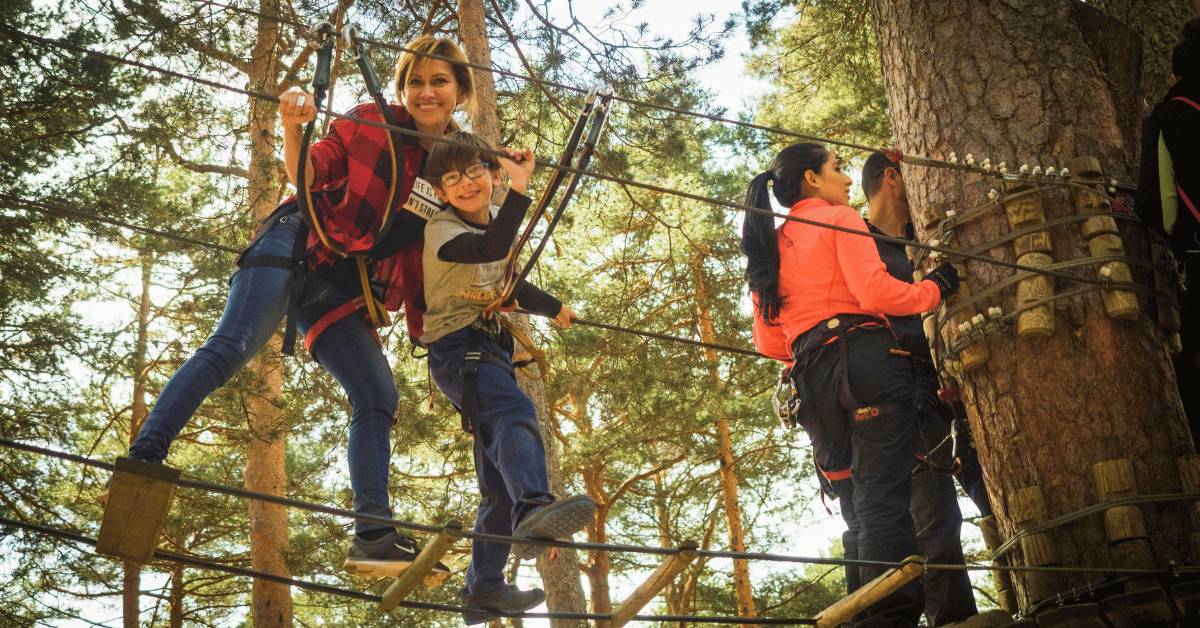
A zipline harness becomes part of a larger aerial adventure system, and the correct option depends on the rider, course design, attachment system, and operating environment.
That distinction matters. ASTM’s F2959 aerial adventure course standard addresses the design, operation, maintenance, and participation requirements of activities that include ziplines and challenge courses. In other words, a harness should be considered as one part of the complete ride system rather than as an isolated accessory. Learn more about aerial adventure course standards from ASTM International. oks at some of the best zipline harness options based on their intended applications and current manufacturer specifications. The recommendations are based on published product design and intended use rather than personal hands-on testing.
Quick Picks: Best Zipline Harnesses
- Best overall for adventure parks: Petzl SWAN EASYFIT STEEL
- Best for courses with additional freefall elements: Petzl SWAN FREEFALL STEEL
- Best for wide adjustability: EDELRID RADIALIS AIR
- Best zipline harness for kids: Petzl SIMBA PARK
- Best simple sit harness for approved group systems: Petzl PANDION STEEL LT
- Best for humid or salty environments: Petzl SWAN EASYFIT STAINLESS
The right choice still depends on the course and connection system. Commercial zipline participants should use the equipment selected and fitted by the operator rather than arriving with a personal harness and assuming it is compatible.
What Makes a Harness Suitable for Zipline Riding?
A search for the best harness for zipline riding can quickly lead to general climbing harness reviews. That is understandable because the equipment looks similar. However, similar webbing and buckles do not automatically mean identical applications.
Zipline Harness vs Climbing Harness
A sport climbing harness is normally designed around climbing movement, belaying, gear organization, and hanging comfort. Adventure-park harnesses may focus more heavily on fast adjustment, visual fit checks, intensive group use, equipment identification, and compatibility with park lanyard systems.
For example, Petzl maintains a dedicated category of adventure park harnesses alongside its versatile climbing, child, and canyoning harness categories. See Petzl’s operator harness range. harness being called the “best climbing harness” does not automatically make it the best choice for ziplining.
Sit Harness vs Full-Body Harness
Sit harnesses wrap around the waist and thighs. They are generally compact and allow considerable freedom of movement.
Full-body harnesses extend over the upper body. EDELRID recommends EN 12277 Type A full-body harnesses as rental harnesses for high ropes courses, noting their upright body positioning and central attachment arrangement. It also identifies child-specific Type B full-body harnesses for children up to 40 kg. ot** mean every zipline requires a full-body harness. The course design, rider requirements, and manufacturer’s instructions determine the appropriate system.
Why Course Compatibility Comes First
Do not select a harness simply because it feels comfortable in a sporting goods store.
The attachment arrangement, lanyard, trolley system, connection point, and operating procedures must work together. ASTM describes aerial adventure safety as involving both the designed experience and correct participant actions. ial zipline, follow the operator’s equipment requirements. For an operated adventure park, approved course equipment should take priority over a personal preference.
Best Harness for Zipline Riding: Top Options
1. Petzl SWAN EASYFIT STEEL: Best Overall for Adventure Parks
The Petzl SWAN EASYFIT STEEL is a full-body harness specifically designed for adventure parks.
Its color-coded straps help simplify fitting instructions, while the FAST LT PIN-LOCK system is designed so the fastening can only be opened by staff using a special tool. Petzl also positions the attachment point higher to help limit the risk of a participant flipping.
- Designed specifically for adventure parks
- Full-body construction
- Color-coded webbing
- Staff-controlled PIN-LOCK buckle
- Built for intensive use
This is one of the strongest options for operators who need a purpose-built harness that can be fitted to many participants during a busy day.
2. Petzl SWAN FREEFALL STEEL: Best for Multi-Element Adventure Courses
Some zipline attractions include high ropes, jumps, or freefall-style elements. The Petzl SWAN FREEFALL STEEL deserves attention in those environments.
It is an adventure-park full-body harness with a dorsal attachment point intended for belaying special activities such as freefall. Its wide ventral attachment point also supports equipment installation and quick visual checks.
- Ventral and dorsal attachment options
- Designed for adventure parks
- Color-coded fitting system
- Adjustable DOUBLEBACK buckles
- Identification features for equipment management
For a course offering more than a basic point-to-point zipline, the additional attachment configuration may make this a more relevant option.
3. EDELRID RADIALIS AIR: Best for Wide Adjustability
The EDELRID RADIALIS AIR is a full-body harness made for high rope courses.
The different colors used for its shoulder, hip, and leg straps are intended to make fitting more intuitive and help trainers visually check the harness. Eight Slide Block buckles provide a broad range of adjustment, while the harness also has a dorsal eyelet certified to EN 361.
- Eight adjustment buckles
- Easy-to-identify strap sections
- Full-body design
- Designed for high ropes courses
- Additional dorsal attachment point
The wide adjustment range makes the RADIALIS AIR particularly interesting for rental operations serving riders with different body shapes and sizes.
4. Petzl SIMBA PARK: Best Zipline Harness for Kids
Children are not simply smaller adults, a fact humanity occasionally remembers when designing safety equipment.
The Petzl SIMBA PARK is a child-specific full-body harness designed for adventure parks. Petzl places its locking buckle on the back, where the PIN-LOCK system can only be opened by staff with the correct tool. The attachment point is positioned to support comfort while moving and limit flipping risk.
- Designed specifically for children
- Full-body construction
- Rear staff-controlled buckle
- Color-coded webbing
- Adventure-park-specific design
For young riders, choose equipment designed around children’s anatomy and the requirements of the course.
5. Petzl PANDION STEEL LT: Best Simple Sit Harness for Group Use
The Petzl PANDION STEEL LT is a durable adjustable sit harness designed for group use.
A single green attachment point helps simplify equipment setup and visual checking. Petzl uses thick webbing and a reinforced attachment point for intensive use.
- Simple sit harness design
- Single attachment point
- Durable construction
- Quick visual checks
- Designed for frequent group use
However, this is where compatibility becomes particularly important. Use a sit harness for zipline riding only when the course design, operator, and applicable equipment instructions approve that harness configuration.
6. Petzl SWAN EASYFIT STAINLESS: Best for Humid and Coastal Courses
Zipline courses near oceans or in constantly humid environments face different equipment conditions.
Petzl’s SWAN adventure-park range includes stainless versions specifically positioned for humid and salty environments. Its SWAN FREEFALL STAINLESS model, for example, uses stainless steel DOUBLEBACK buckles and thick webbing for intensive use in high-humidity conditions. , environmental exposure should be part of the buying decision rather than an unpleasant discovery several months after purchasing an entire equipment fleet.
How to Choose the Best Zipline Harness
Check Fit and Adjustment Range
A harness must fit the actual rider.
Look for sufficient waist, leg, and, on a full-body model, shoulder adjustment. A wide adjustment range is especially valuable for adventure parks where one harness design may be used by participants with different body types.
Color-coded straps can also help instructors explain the fitting process and identify twists or incorrectly positioned sections.
Look at the Attachment Point
The attachment configuration deserves close attention.
Some adventure-park harnesses use a clearly colored central attachment point to support quick visual checking. Other models add a dorsal attachment point for specific activities.
Never invent your own connection method. Use only attachment points and configurations identified in the manufacturer’s instructions and approved for the course system.
Consider Hanging Comfort
The best harness for zipline riding should be considered not only while standing on the platform but also while loaded or suspended.
Webbing position, leg loop support, and harness construction can affect comfort. Petzl even offers optional comfort foam for its SWAN harnesses to improve comfort during longer periods of hanging. nopy tours and multi-element courses, comfort deserves more attention than it might receive on a very short ride.
Match Materials to the Environment
Think about where the harness will be used.
A dry inland adventure park and a coastal course do not expose equipment to identical conditions. Manufacturers offer specific products for humid and salty environments for a reason.
Check the stated intended environment and maintenance instructions before buying.
Check Inspection and Equipment Management Features
Rental harnesses need regular checks and organized equipment records.
Identification panels, marking areas, and easy visual inspection features can make equipment management simpler for operators.
Petzl advises visually and functionally checking PPE before each use according to its instructions. It also recommends a detailed inspection by a competent person at least every 12 months and after an exceptional event that could affect equipment reliability. the inspection schedule of the actual harness manufacturer and any applicable course procedures.
Best Harness for Zipline Riding for Kids
When choosing a safety harness for ziplining with children, start with child-specific equipment.
EDELRID notes that special Type B full-body harnesses are available for children up to 40 kg in high ropes course applications. Petzl likewise produces the SIMBA PARK specifically for children in adventure parks. ness should provide the required adjustment range while working with the course’s attachment system.
Do not simply tighten an oversized adult harness until it “looks close enough.” Use the size, weight, and fitting requirements specified by the equipment manufacturer and the zipline operator.
Common Zipline Harness Buying Mistakes
Buying only by price: A cheap harness is not a bargain when it is unsuitable for the intended system.
Choosing a harness because climbers recommend it: Climbing reviews often measure sport climbing, mountaineering, and belaying performance. Those priorities may differ from adventure-park requirements.
Ignoring the attachment configuration: More attachment points do not automatically make a harness better.
Confusing fall-arrest equipment with adventure-park equipment: Equipment designed for industrial work at height has a different intended application from a purpose-built adventure-park harness.
Skipping fit checks: Even a high-quality harness needs correct fitting and adjustment.
Ignoring equipment history: Damage, chemical exposure, heat, unusual loading events, and heavy use can affect PPE and should be considered during inspection. Petzl’s inspection guidance specifically calls for checking straps, safety stitching, attachment areas, and adjustment buckles.
What to Check Before Use
Follow the manufacturer’s official inspection procedure.
Typical harness checks may include examining:
- Webbing for cuts or unusual wear
- Safety stitching for damaged or loose threads
- Attachment points
- Adjustment buckles
- Correct strap threading
- Signs of heat or chemical damage
Petzl’s published harness inspection procedure identifies these as important inspection areas and states that questionable PPE should be assessed rather than casually returned to service. ld a Harness Be Removed From Service?
There is no responsible universal answer such as “replace every harness after exactly three years.”
Service life depends on the specific product instructions, its history, use conditions, inspection findings, and exceptional events.
Remove questionable equipment from use and follow the manufacturer’s retirement criteria. For commercial operations, equipment inspection and usage documentation should form part of normal PPE management. EDELRID explicitly notes that high ropes course equipment requires regular checks and documented use. Asked Questions
Can You Use a Climbing Harness for Ziplining?
Only when the harness and configuration are approved for the specific activity and system.
Do not assume that a highly rated sport climbing harness is automatically an appropriate zipline harness. Check the manufacturer’s intended uses and follow the zipline operator’s requirements.
Is a Full-Body Harness Better for Ziplining?
Not universally.
Full-body harnesses are widely used in adventure parks, and EDELRID recommends EN 12277 Type A full-body designs as rental harnesses for high ropes courses. However, the correct harness still depends on the course and system. Should a Zipline Harness Be?
The harness should be fitted according to its manufacturer’s instructions and checked by trained course staff where applicable.
It should not be treated like ordinary clothing. Correct strap positioning, buckle adjustment, and attachment setup are part of the safety system.
What Is the Best Zipline Harness for Kids?
For adventure-park applications, the Petzl SIMBA PARK is a strong child-specific option to compare because it is designed specifically for children and adventure park use. The EDELRID RADIALIS AIR JUNIOR is another purpose-built full-body option for high ropes courses. ine Harness Should You Choose?
For most adventure-park operators comparing the best harness for zipline riding, the Petzl SWAN EASYFIT STEEL stands out because of its full-body design, adventure-park focus, staff-controlled fastening system, and features intended to simplify participant fitting.
For multi-element courses with special belayed activities, consider the Petzl SWAN FREEFALL STEEL. The EDELRID RADIALIS AIR is worth comparing when a wide range of adjustment is a major priority, while the Petzl SIMBA PARK is specifically designed for young adventure-park participants.
The most important lesson is simple: buy for the actual zipline system and rider, not for the broad popularity of a harness online. The best-looking harness on a comparison page is considerably less impressive when it was designed for a different activity.
Final Overview
Choosing the best harness for zipline riding depends on more than comfort or price. The right harness should match the rider, zipline system, environment, and safety requirements. Full-body harnesses are often preferred for adventure parks because they provide better positioning and easier fitting, while specialized options are available for children and professional courses. Before buying, always check manufacturer recommendations, inspection requirements, and compatibility with the intended setup. A reliable zipline harness is an investment in comfort, confidence, and most importantly, rider safety during every adventure.